Breathwork is one of the simplest and most effective ways to prepare your mind for Mendi training.
By controlling your breathing, you help your body and brain shift into a state of calm focus, which can make your neurofeedback sessions smoother and more effective.
Why Breathwork Helps
Your breathing directly affects your nervous system. Slow, steady breaths activate the body’s relaxation response; lowering stress, improving blood flow, and helping your prefrontal cortex (PFC) function more efficiently.
When you pair this with Mendi’s neurofeedback, your brain learns to associate calm breathing with steady focus; a powerful combination that carries into everyday life.
How to Practice Breathwork
You can use the in-app breathwork option or practice manually before a session.
Here’s a simple way to start, if not using the app to guide you:
Sit comfortably and relax your shoulders.
Inhale slowly through your nose for about 4 seconds.
Hold briefly for 1–2 seconds.
Exhale gently through your mouth for 6 seconds.
Repeat for 1–2 minutes before training.
Try to make your breaths smooth and quiet, not forced. The goal is ease, not effort.
Cyclic Sighing 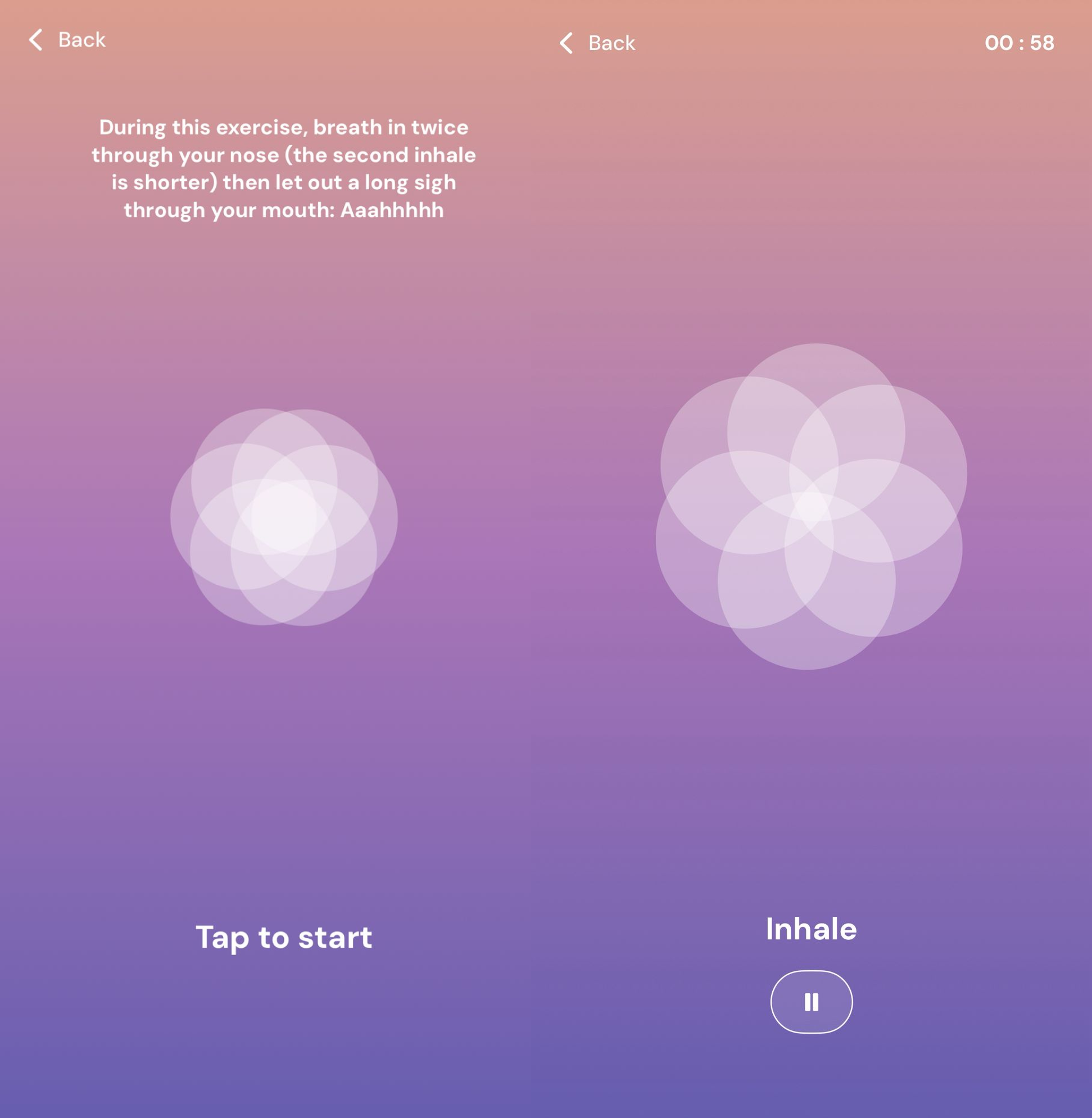
Mendi’s guided breathwork is based on a method called cyclic sighing; a research-backed breathing pattern that helps calm the nervous system.
It involves:
Taking one deep inhale through the nose, followed by a second, shorter top-up inhale.
Exhaling slowly and fully through the mouth.
This technique naturally balances oxygen and carbon dioxide levels in the blood, promoting relaxation and clearer focus.
Before or During Training
You can:
Use breathwork before starting a session to center yourself.
Enable the breathwork option in the Mendi app to begin every training with a short breathing exercise.
Use breath awareness during training if your focus drifts; simply return attention to your breath for a few cycles.
Tips for Better Results
Practice breathwork in a quiet, dimly lit environment.
Keep your posture upright but relaxed.
If you feel lightheaded, return to normal breathing; it’s about calm, not control.
Over time, this breathing pattern will become second nature during focus and stress.
Each time you pair calm breathing with focus, you’re teaching your brain to regulate itself — one breath at a time.